

Impedance Controlled Cable: The Unsung Hero of High-Speed Signal Integrity
Release Date:2025-07-16


In the fast-paced world of electronics, where data travels at the speed of light and systems demand pinpoint accuracy, one component often flies under the radar while holding everything together: the impedance controlled cable. Far more than a simple conductor, this specialized cable is engineered to maintain a consistent electrical impedance, making it indispensable for high-frequency, high-speed applications where signal integrity is non-negotiable. Let’s dive into why impedance controlled cables are revolutionizing industries from telecommunications to aerospace.
At its core, impedance refers to the total opposition a cable presents to the flow of alternating current (AC) signals, combining resistance, inductance, and capacitance. In standard cables, impedance can fluctuate due to variations in conductor size, dielectric material, or even bending during installation. These fluctuations cause signal reflections, where part of the signal bounces back toward the source instead of reaching its destination. The result? Data errors, signal degradation, and system failures—costly issues in critical applications like 5G networks, medical imaging, or autonomous vehicle sensors.
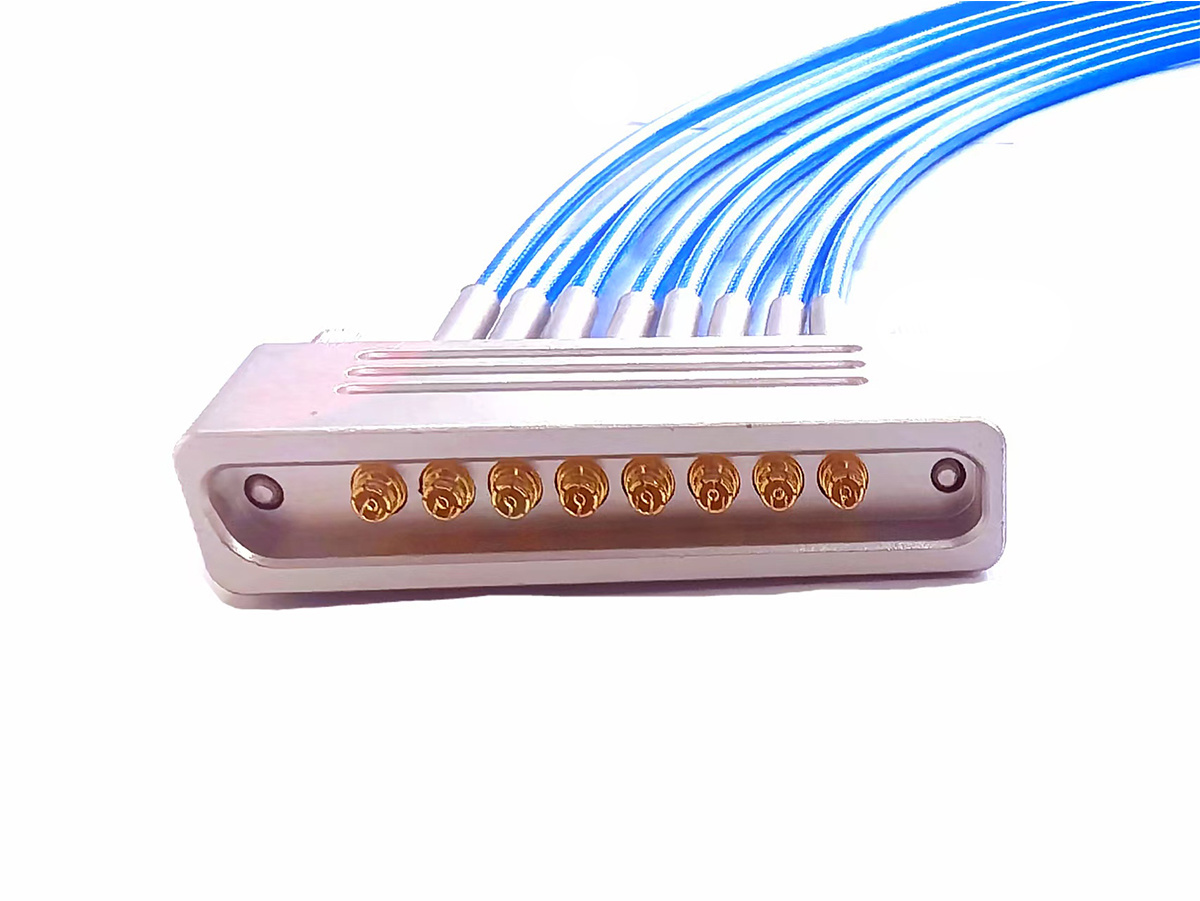
This is where the impedance controlled cable shines. By design, it maintains a precise, uniform impedance (typically 50Ω, 75Ω, or custom values) across its entire length, even in harsh environments or tight installations. This consistency eliminates reflections, ensuring that signals arrive at their target clean, strong, and on time. For engineers and system designers, this translates to unmatched reliability—a 卖点 that can’t be overstated in industries where downtime or inaccuracy risks lives or millions in losses.
Another standout advantage is its ability to handle extreme frequencies. As technology pushes toward faster data rates (think 100Gbps and beyond in data centers) and higher frequencies (such as in radar systems or satellite communication), standard cables falter. Their inconsistent impedance creates “signal noise” and crosstalk, where signals interfere with one another. Impedance controlled cables, however, are crafted with advanced dielectric materials (like PTFE or foam polyethylene) and precisely calibrated conductor geometries. This allows them to transmit high-frequency signals with minimal loss, making them the backbone of next-gen technologies.
Durability isof next-gen technologies.
Durability is yet another feather in the cap of impedance controlled cables. Unlike generic cables that degrade under mechanical stress, temperature swings, or moisture, these cables are built to withstand harsh conditions. Whether routed through the vibration-prone interior of a jet engine or the extreme cold of outer space, their impedance remains stable. This resilience reduces maintenance costs and extends system lifespans—a critical selling point for industries like defense, oil and gas, and industrial automation.
Flexibility, often overlooked in high-performance cables, is also a key benefit. Many impedance controlled cables are designed to be highly flexible, allowing for easy installation in tight spaces without compromising impedance. This is a game-changer for compact devices like medical scanners or IoT sensors, where every millimeter of space counts. Engineers no longer have to choose between performance and practicality.
Perhaps most importantly, impedance controlled cables simplify system design. By eliminating the need for complex signal conditioning or compensation circuits, they reduce design time and costs. Engineers can trust that the cable will maintain signal integrity, allowing them to focus on innovating rather than troubleshooting. This efficiency boost is a major draw for tech companies racing to bring new products to market.
In a world where data is the lifeblood of innovation, the impedance controlled cable is more than a component—it’s a foundation. Its ability to deliver consistent, high-integrity signals at extreme speeds and in harsh environments makes it irreplaceable in cutting-edge technologies. From powering 5G networks that connect the globe to enabling life-saving medical devices, this unsung hero ensures that our most critical systems perform at their best, every single time. For anyone building the future of electronics, the message is clear: when precision matters, choose an impedance controll


Do you have Questions?
Not sure what you're looking for? Unable to find what you need?