

Microwave Coaxial Cable: The Backbone of High-Performance Signal Transmission
Release Date:2025-07-14


In the realm of modern communication and high-frequency technology, the microwave coaxial cable stands as an unsung hero, playing a pivotal role in ensuring seamless and reliable signal transmission. From aerospace and defense systems to telecommunications and medical equipment, this specialized cable has become an indispensable component, offering a host of advantages that make it the preferred choice for demanding applications.
One of the most prominent selling points of the microwave coaxial cable is its exceptional signal integrity. Designed to operate at high frequencies, typically ranging from 1 GHz to over 100 GHz, these cables minimize signal loss and distortion, ensuring that the transmitted data or signals remain accurate and consistent. This is achieved through a precise construction that includes a central conductor, a dielectric insulator, a metallic shield, and an outer jacket. The metallic shield, often made of copper or aluminum, effectively blocks electromagnetic interference (EMI) and radio frequency interference (RFI), preventing external signals from disrupting the transmission and vice versa. This interference immunity is crucial in environments where multiple electronic devices are operating simultaneously, such as in data centers or communication hubs.
Another key advantage is the broad bandwidth capability of microwave coaxial cables. In today's data-driven world, where the demand for high-speed data transmission is ever-increasing, these cables rise to the challenge. They can handle large amounts of data at incredibly fast rates, making them ideal for applications like 5G networks, satellite communication, and radar systems. Whether it's streaming high-definition video, transmitting real-time sensor data, or facilitating long-distance communication, the microwave coaxial cable ensures that the bandwidth requirements are met with ease.
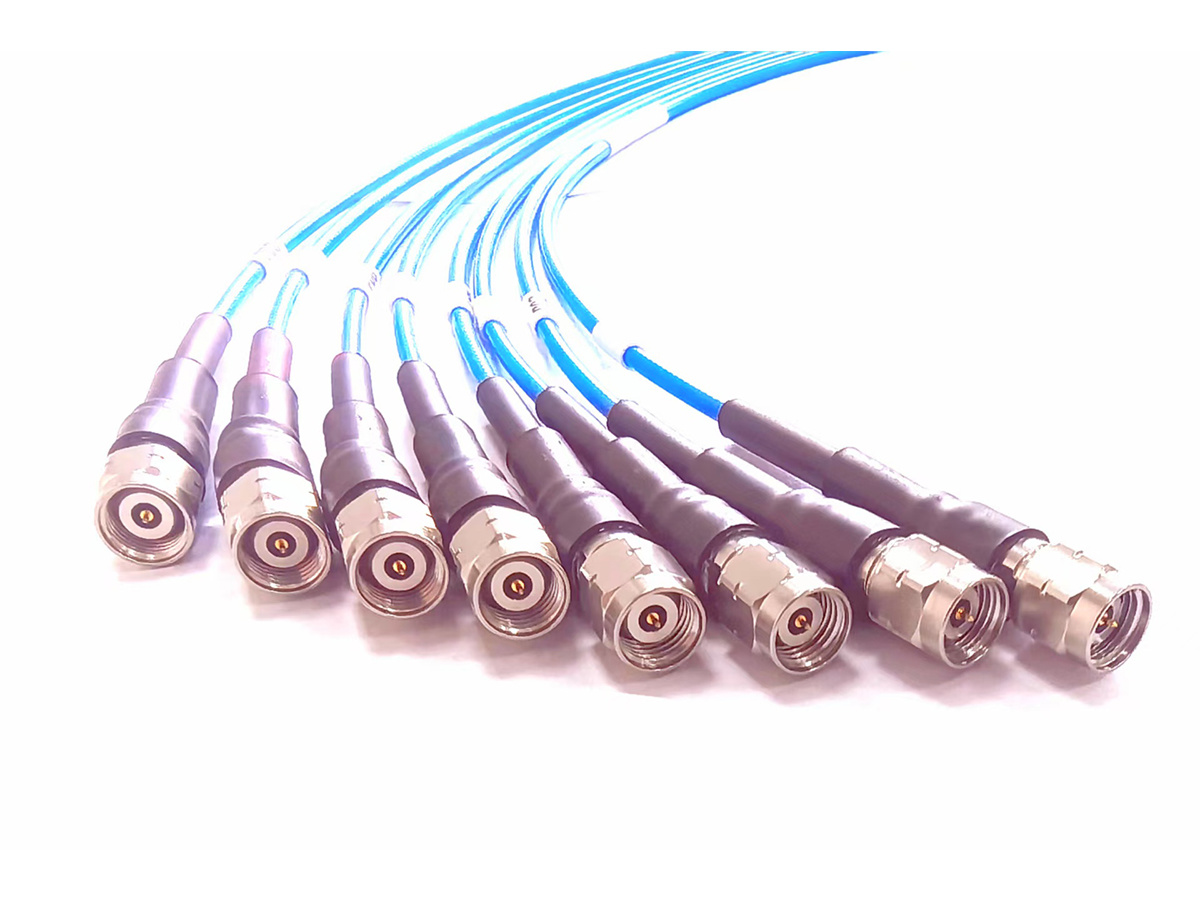
Durability is yet another factor that sets microwave coaxial cables apart. Built to withstand harsh environmental conditions, they are resistant to moisture, temperature extremes, vibration, and physical wear and tear. This makes them suitable for both indoor and outdoor use, including rugged environments such as industrial facilities, oil and gas platforms, and military operations. The outer jacket, made from materials like polyethylene or fluoropolymers, provides an extra layer of protection, ensuring the cable's longevity and reliable performance even in the most challenging circumstances.
Flexibility is also a notable feature of many microwave coaxial cable designs. While maintaining their structural integrity and performance, these cables can be bent and routed in tight spaces, allowing for easy installation in complex systems. This flexibility simplifies the integration process, reducing installation time and costs, especially in applications where space is limited, such as in aerospace equipment or medical devices.
In addition to these performance-driven advantages, microwave coaxial cables are available in a wide range of configurations to suit specific application needs. From different impedance ratings (such as 50 ohms and 75 ohms) to various sizes and connector types, there is a cable solution for every requirement. This versatility ensures that engineers and designers can select the perfect cable to optimize the performance of their systems, whether it's for a high-power radar system or a sensitive medical imaging device.
In conclusion, the microwave coaxial cable is a high-performance component that combines exceptional signal integrity, broad bandwidth, durability, flexibility, and versatility. Its ability to deliver reliable signal transmission in demanding environments makes it an essential part of modern technology. As the world continues to rely on faster, more efficient communication and data transfer, the microwave coaxial cable will undoubtedly remain at the forefront, enabling innovation and progress across various industries.


Do you have Questions?
Not sure what you're looking for? Unable to find what you need?