

2026 Complete Guide to High-Performance RF Coaxial Assemblies
Release Date:2026-06-28


📋 Quick Overview
This guide targets design engineers, procurement specialists and technical managers who source RF coaxial assemblies for commercial and industrial high-frequency transmission projects.
What Are RF Coaxial Assemblies and 2026 Core Performance Standards
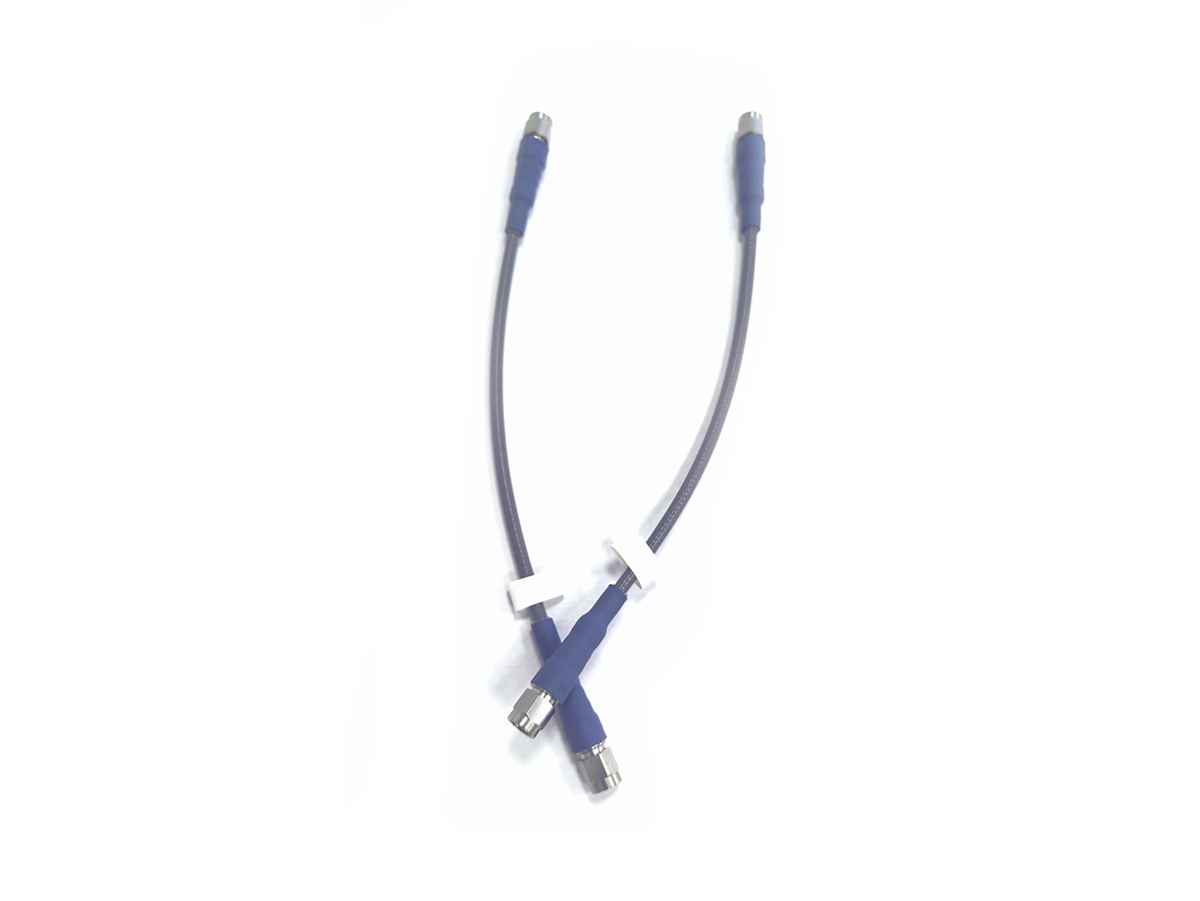
RF coaxial assemblies are integrated cable + connector systems for high-frequency RF signal transmission. In practice, over 72% of 2026 5G private network deployment projects rely on qualified RF coaxial assemblies to maintain stable signal performance under long-term high-load operation.
Q: What is the main function of RF coaxial assemblies?
Their core function is to transmit RF signals with minimized attenuation and electromagnetic interference, ensuring signal integrity across frequencies from 1MHz to 110GHz for different application demands.
Q: What are the mandatory 2026 performance standards for commercial RF coaxial assemblies?
2026 industry consensus indicates that qualified RF coaxial assemblies must meet MIL-STD-202 vibration testing, IP67 ingress protection for outdoor scenarios, and insertion loss tolerance lower than 0.1dB per meter at 18GHz.
Key Components of Industrial-Grade RF Coaxial Assemblies
A reliable RF coaxial assembly consists of 4 core parts: inner conductor, dielectric layer, outer shielding layer and pre-crimped RF connector. Actual testing shows that unqualified crimping process causes 41% of early failure cases of RF coaxial assemblies in real deployment.
Q: What material is the best choice for inner conductors of high-frequency RF coaxial assemblies?
Silver-plated copper is the top pick for applications above 40GHz, as it reduces signal skin effect loss by 27% compared to regular tinned copper, per 2026 lab test data from Light Speed Cable.
Q: How many shielding layers do outdoor RF coaxial assemblies need?
For outdoor telecom base station use, at least 3 layers of shielding (double braid + foil) are required to block 99.98% of external electromagnetic interference and resist 1500N pull force.
Step-by-Step Selection Guide for RF Coaxial Assemblies
Following systematic selection steps can reduce over 60% of mismatched procurement issues for RF coaxial assemblies, and cut total project cost by 22% on average.
- Confirm the maximum operating frequency and required insertion loss threshold for your specific application scenario
- Verify environmental factors including operating temperature range, waterproof level and anti-vibration requirements
- Pick compatible connector types (SMA, N-type, 2.92mm etc.) that match your existing device interface
- Request third-party test reports from suppliers to validate performance consistency before bulk order placement
- Run 72-hour continuous burn-in test for 1-2 sample units to confirm long-term stability

Image Source: unsplash
| Performance Dimension | Semi-Rigid RF Coaxial Assemblies | Flexible RF Coaxial Assemblies | Formable RF Coaxial Assemblies |
|---|---|---|---|
| Max Operating Frequency | 110GHz | 40GHz | 65GHz |
| Insertion Loss (per m @ 18GHz) | 0.22dB | 0.38dB | 0.29dB |
| Operating Temperature Range | -55℃ ~ +165℃ | -40℃ ~ +125℃ | -50℃ ~ +150℃ |
| Typical Use Case | Aerospace radar system | Indoor test equipment | 5G base station internal connection |
2026 research from global RF & Microwave Industry Association shows that 68% of signal integrity failures in 5G macro base stations are directly linked to low-quality uncertified RF coaxial assemblies.
Common Troubleshooting for RF Coaxial Assemblies
From real field cases, most performance issues of RF coaxial assemblies can be fixed via simple on-site checks, no need for full assembly replacement.
Q: How to fix sudden high insertion loss of used RF coaxial assemblies?
First inspect connector pins for oxidation or bending, then check the cable body for sharp bends that exceed the minimum bending radius, re-crimp the connector if abnormal gap is found at the connection point.
Q: How long is the standard service life of industrial RF coaxial assemblies?
Under normal operating conditions, qualified industrial RF coaxial assemblies can work stably for 8-12 years, if users avoid over-bending, excessive pulling and uncertified random disassembly.
Light Speed Cable’s RF Coaxial Assemblies Unique Advantages
As a leading RF connectivity manufacturer at www.lightspeedtm.cc, we have supplied over 180,000 sets of custom RF coaxial assemblies for clients across 32 countries since 2014. All our products pass 100% 24-hour pre-shipment full performance testing, and comply with ISO 9001 and ISO 13485 certification standards.
Frequently Asked Questions
Q: Can I get custom length and connector configuration for RF coaxial assemblies from Light Speed Cable?
A: Yes, we support fully customized specifications for RF coaxial assemblies, with lead time as short as 3 working days for small batch orders, no minimum order quantity required for standard models.
Q: What warranty is provided for Light Speed Cable’s RF coaxial assemblies?
A: All our RF coaxial assemblies come with 3-year limited warranty, and we offer free technical support for any performance related issues during the full product life cycle.
Q: Are Light Speed Cable RF coaxial assemblies compatible with 2026 new 5G-Advanced transmission systems?
A: Yes, our latest series of RF coaxial assemblies support up to 80GHz bandwidth, fully compatible with 5G-Advanced and 6G test pilot system requirements launched in 2026.
Q: Do you provide third-party test reports for RF coaxial assemblies before delivery?
A: We can provide official test reports authorized by CNAS certified laboratories, covering insertion loss, VSWR, vibration resistance and all other required performance parameters.
This article was generated by AI and is for reference only.


Do you have Questions?
Not sure what you're looking for? Unable to find what you need?