

Phase Stable Coaxial Cable: Ensuring Precision in Signal Transmission
Release Date:2025-06-30


In the realm of modern communication and electronic systems, the accurate and consistent transmission of signals is of utmost importance. Phase stable coaxial cable has emerged as a critical solution, addressing the challenges associated with maintaining signal integrity, especially in applications where phase stability is a key requirement.
A phase stable coaxial cable is engineered to minimize phase variation over a wide range of frequencies and environmental conditions. The structure of a coaxial cable, with its central conductor, dielectric insulation, shield, and outer jacket, is optimized in phase stable coaxial cables to achieve this remarkable stability. The central conductor is responsible for carrying the electrical signal, while the dielectric insulation surrounding it plays a crucial role in determining the cable's electrical characteristics.
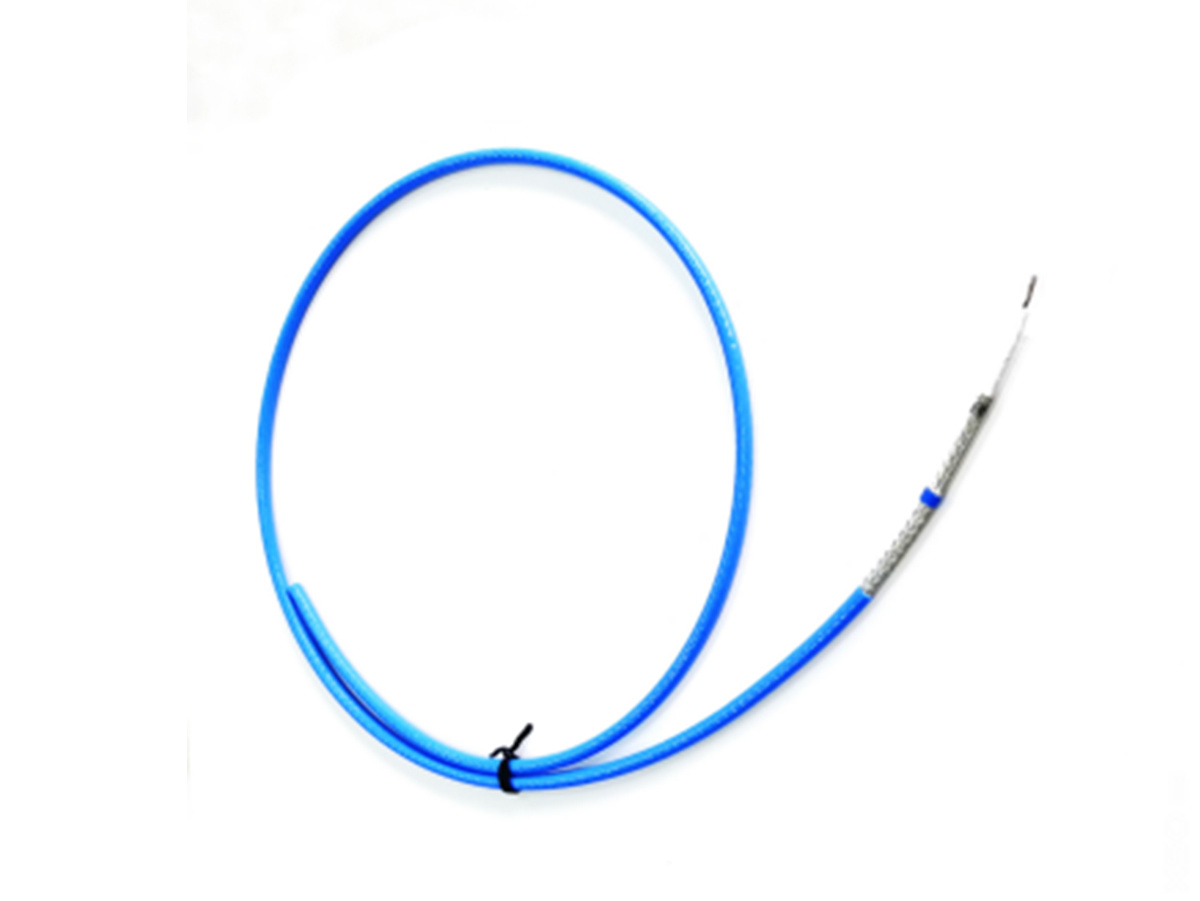
In applications such as radar systems, satellite communications, and test and measurement equipment, maintaining the phase relationship between signals is vital. Phase stable coaxial cables ensure that the signals arriving at different components or receivers are in the correct phase, enabling accurate data processing and analysis. In radar systems, for example, the precise phase information of the reflected signals is used to determine the distance, speed, and direction of objects. Any phase distortion in the coaxial cables connecting the radar components can lead to inaccurate measurements and reduced system performance.
One of the key factors contributing to the phase stability of these cables is the choice of dielectric material. Specialized dielectric materials with consistent electrical properties are used in phase stable coaxial cables. These materials have a low dielectric constant and stable temperature coefficient, which means that the electrical properties of the cable remain relatively unchanged even when the temperature fluctuates. This is essential in outdoor applications, where cables are exposed to varying weather conditions.
The shielding of phase stable coaxial cables also plays a significant role in maintaining signal integrity. The shield effectively blocks external electromagnetic interference, preventing it from affecting the signal within the cable. In addition, it reduces signal leakage from the cable, ensuring that the signal remains contained and is not disrupted by nearby electronic devices. This shielding mechanism is crucial in densely populated electronic environments, such as data centers and communication hubs.
Another advantage of phase stable coaxial cables is their durability. They are designed to withstand mechanical stress, including bending, twisting, and pulling, without compromising their phase stability or signal-carrying capabilities. This makes them suitable for applications where the cables need to be moved or repositioned frequently, such as in mobile communication systems and portable test equipment.
In conclusion, phase stable coaxial cable is an indispensable component in modern communication and electronic systems. Its ability to maintain phase stability, resist electromagnetic interference, and endure mechanical stress makes it a reliable choice for a wide range of applications. As technology continues to advance and the demand for high-precision signal transmission grows, phase stable coaxial cables will continue to evolve and play a vital role in ensuring the smooth operation of various electronic devices and systems.


Do you have Questions?
Not sure what you're looking for? Unable to find what you need?